
Food safety is an essential consideration in the international seafood industry. Frozen seafood exporters and processing facilities must manage potential food safety hazards throughout handling, processing, storage, and transportation.
HACCP seafood certification is an important topic for seafood buyers seeking suppliers with documented food safety management practices.
Understanding HACCP helps importers make informed decisions when evaluating seafood processing facilities.
What Is HACCP in the Seafood Industry?
HACCP stands for Hazard Analysis and Critical Control Points.
It is a preventive food safety management system designed to identify, evaluate, and control significant hazards during food production.
In seafood processing, HACCP principles help businesses manage biological, chemical, and physical hazards that may affect product safety.
Why Is HACCP Important for Frozen Seafood?
Frozen seafood products require appropriate handling and temperature management throughout the supply chain.
A HACCP-based system helps processors identify hazards and establish suitable preventive controls.
Potential areas of concern include:
- Raw material receiving procedures.
- Seafood processing and handling.
- Temperature control during storage.
- Prevention of cross-contamination.
- Packaging and sanitation practices.
The specific controls depend on the seafood species, processing methods, and identified hazards.
The Seven Principles of HACCP
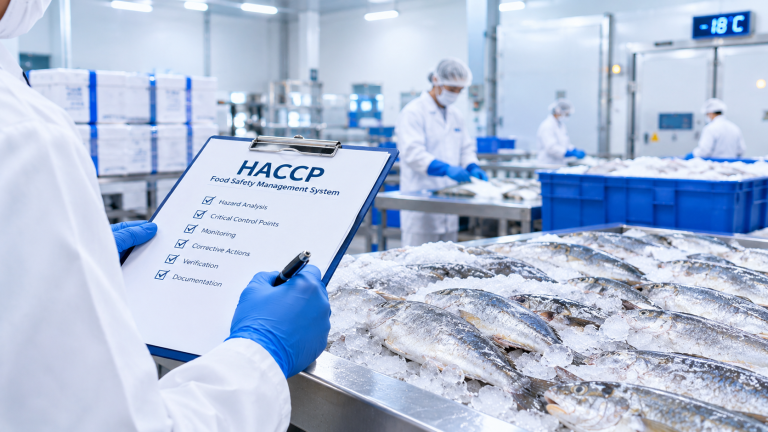
HACCP is based on seven internationally recognized principles:
- Conduct a hazard analysis.
- Determine critical control points.
- Establish critical limits.
- Establish monitoring procedures.
- Define corrective actions.
- Establish verification procedures.
- Maintain documentation and records.
These principles provide a structured approach to food safety management.
HACCP Certification and International Seafood Trade
Seafood importers should understand that implementing HACCP principles and obtaining third-party HACCP certification are not necessarily the same.
Certification requirements can vary depending on the destination country, applicable regulations, and customer specifications.
Buyers should verify certificate validity, issuing organizations, facility coverage, and relevant regulatory requirements.
Evaluating Indonesian Seafood Suppliers
For businesses importing seafood from Indonesia, reviewing food safety documentation is an important supplier evaluation step.
Samudera Samanea Berkah presents HACCP-related certification information on its website, which prospective buyers can review and verify directly.
Buyers should also confirm product specifications, shipping conditions, and applicable import requirements.
Conclusion
HACCP plays an important role in preventing food safety hazards throughout seafood processing.
Understanding HACCP principles, documentation, and certification requirements helps international seafood buyers evaluate suppliers and make more informed sourcing decisions.