
How HACCP Certification Guarantees Seafood Quality for Export – In the international seafood trade, quality assurance and food safety are critical factors that determine a country’s competitiveness.
For exporters, meeting global buyers’ expectations requires more than just delivering fresh seafood — it requires proven safety certification recognized worldwide.
One of the most important systems for guaranteeing quality in the seafood export industry is HACCP (Hazard Analysis and Critical Control Point).
For companies like SAM2BER, which serve markets in Korea, Vietnam, Japan, and Europe, HACCP certification is not just a regulatory requirement — it’s a trust signal that ensures consistent, safe, and export-ready seafood products.
What is HACCP Certification?
HACCP is a global food safety management system designed to identify, evaluate, and control potential hazards throughout the production process.
The goal is to prevent biological, chemical, and physical risks before they affect the final product.
The HACCP system focuses on seven key principles, including:
- Hazard analysis and identification.
- Determination of critical control points (CCPs).
- Setting critical limits for each CCP.
- Monitoring and verification procedures.
- Corrective actions when deviations occur.
- Record keeping and documentation.
- Continuous review and improvement.
For seafood exporters in Indonesia, having a HACCP-certified seafood factory means every stage — from fish handling, cleaning, freezing, to packaging — follows strict hygiene and quality controls.
Why HACCP is Vital for Seafood Exporters
Unlike other food products, seafood is highly perishable and requires consistent temperature management and sanitation standards.
Without proper control, even small errors in handling can lead to spoilage, contamination, or rejection during import inspection.
That’s why global importers, especially in Korea, Japan, and the European Union, demand seafood products that come from HACCP-approved facilities.
Key benefits of HACCP certification for seafood exporters:
- ✅ Builds buyer confidence and international credibility.
- ✅ Reduces product rejection rates at import checkpoints.
- ✅ Ensures compliance with major markets’ food safety regulations.
- ✅ Protects brand reputation by preventing contamination risks.
- ✅ Streamlines documentation for export clearance (Health Certificate, GMP, etc.).
In short, HACCP certification transforms food safety from a local compliance task into a global marketing advantage.
How Indonesian Exporters Implement HACCP in Seafood Processing
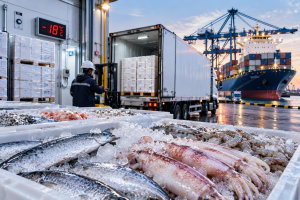
Indonesia has become one of Asia’s top frozen seafood exporters, supplying products such as tuna, shrimp, squid, crab, and mackerel to international markets.
To meet international standards, many Indonesian seafood companies, including SAM2BER, operate HACCP-certified processing facilities under the supervision of the Ministry of Marine Affairs and Fisheries (KKP).
Typical HACCP implementation steps in Indonesian seafood factories include:
- Raw material inspection to ensure only high-grade fish are processed.
- Temperature monitoring from receiving docks to frozen storage rooms.
- Hygiene control for workers and processing equipment.
- Metal detection and microbiological testing for final product safety.
- Packaging and labeling compliance with export market requirements.
By maintaining these standards, Indonesian seafood suppliers ensure that every product shipped abroad remains fresh, safe, and compliant with global regulations.
How HACCP Certification Enhances Export Opportunities
Global seafood buyers now prioritize certified suppliers over uncertified ones.
For B2B importers and distributors, HACCP certification simplifies the due diligence process — making it easier to select reliable partners from Indonesia.
Export advantages of HACCP-certified seafood factories:
- Easier market access to regions like the EU, Japan, Korea, and the U.S.
- Compliance with national authorities such as BPOM, KKP, and EU-approved plant listings.
- Improved traceability for eco-conscious and sustainable buyers.
- Eligibility for high-value contracts and long-term supply agreements.
As global demand for sustainable seafood grows, HACCP certification acts as the foundation for trust and transparency in international trade.
SAM2BER’s Commitment to Quality and Compliance
At SAM2BER, we believe that exporting seafood isn’t just about logistics — it’s about responsibility.
Our production facilities are HACCP-certified, ensuring that all tuna, shrimp, squid, and other products meet international safety and quality benchmarks.
Through continuous training, process audits, and investment in modern freezing technology, SAM2BER guarantees:
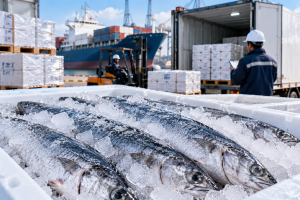
- Stable cold-chain management from catch to container.
- Transparent documentation and batch traceability.
- Responsive export support for all global clients.
With these measures, SAM2BER continues to build long-term partnerships with importers who prioritize quality, safety, and reliability.
Conclusion: HACCP as the Standard for Global Trust
In today’s global seafood market, HACCP certification has become a universal language of trust between exporters and buyers.
For Indonesian seafood exporters, achieving and maintaining HACCP certification is not just about meeting requirements — it’s about demonstrating a commitment to excellence.
By choosing a HACCP-certified seafood supplier like SAM2BER, international buyers can be confident that every shipment from Indonesia meets the highest standards of freshness, safety, and quality.
As global demand for safe and sustainable seafood continues to rise, HACCP remains the key to unlocking long-term export success.