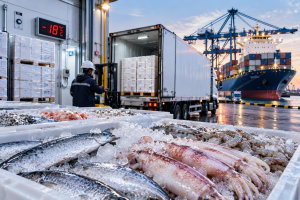
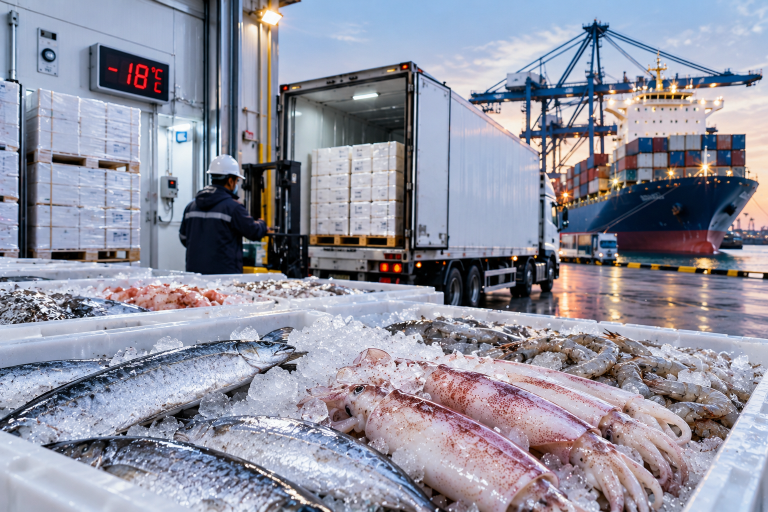

International seafood transportation requires careful handling to maintain product quality from processing facilities to overseas destinations.
Seafood cold chain management plays an essential role in preserving frozen products during storage, loading, shipping, and distribution.
For seafood exporters and importers, understanding cold chain procedures can help minimize product deterioration and improve shipment reliability.
What Is Seafood Cold Chain Management?
Seafood cold chain management refers to maintaining appropriate temperature conditions throughout the seafood supply chain.
The process covers several stages, including freezing, cold storage, transportation, and distribution.
Effective temperature management helps preserve product characteristics and supports food safety controls.
Why Temperature Control Matters
Frozen seafood is sensitive to temperature fluctuations.
Repeated warming and refreezing can damage product texture, contribute to moisture loss, and reduce overall quality.
Many frozen seafood products are stored and transported at -18°C or below, although specific temperature requirements depend on product characteristics and applicable regulations.
Maintaining suitable conditions helps reduce the risk of quality deterioration.
Essential Components of a Seafood Cold Chain
An effective seafood cold chain generally involves several important elements:
- Proper freezing: Using suitable freezing methods to preserve product quality.
- Cold storage: Maintaining appropriate freezer temperatures before shipping.
- Refrigerated transportation: Using equipment designed for frozen cargo.
- Temperature monitoring: Tracking conditions throughout storage and transportation.
- Careful handling: Minimizing unnecessary exposure to warmer environments.
Coordination between exporters, logistics providers, and importers is essential.
Common Cold Chain Challenges
International seafood shipments may encounter operational challenges during transportation.
These can include equipment malfunctions, loading delays, incorrect temperature settings, and improper cargo handling.
Businesses can reduce risks through equipment inspections, documented procedures, and appropriate monitoring systems.
Choosing an Indonesian Frozen Seafood Exporter
International buyers should evaluate how suppliers manage frozen seafood storage and shipping arrangements.
Businesses interested in frozen seafood exports from Indonesia can explore products offered by Samudera Samanea Berkah.
Before ordering, buyers should confirm transportation requirements, packaging specifications, and available logistics arrangements.
Conclusion
Seafood cold chain management is an important part of successful international frozen seafood distribution.
By maintaining suitable temperatures, monitoring shipments, and coordinating logistics, exporters and importers can better protect product quality throughout the supply chain.